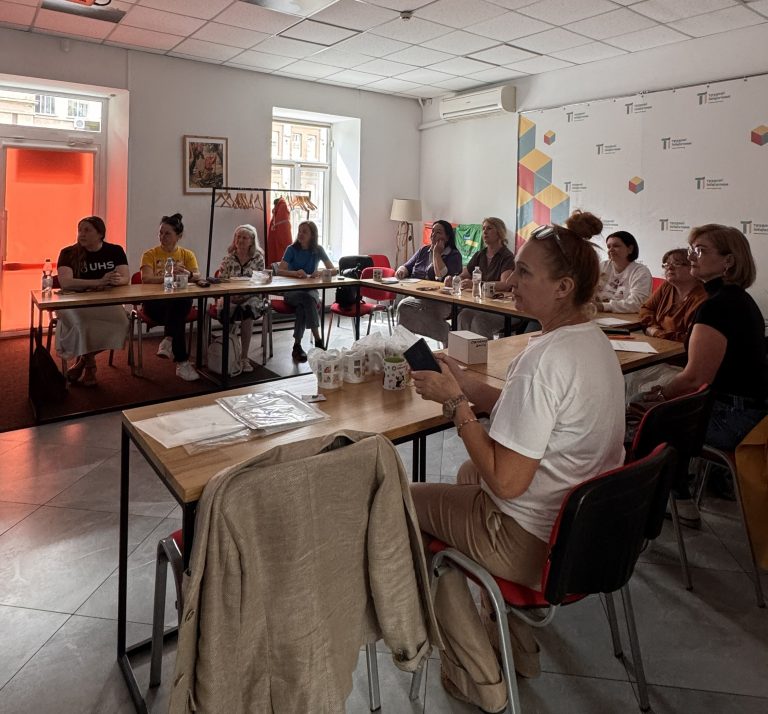
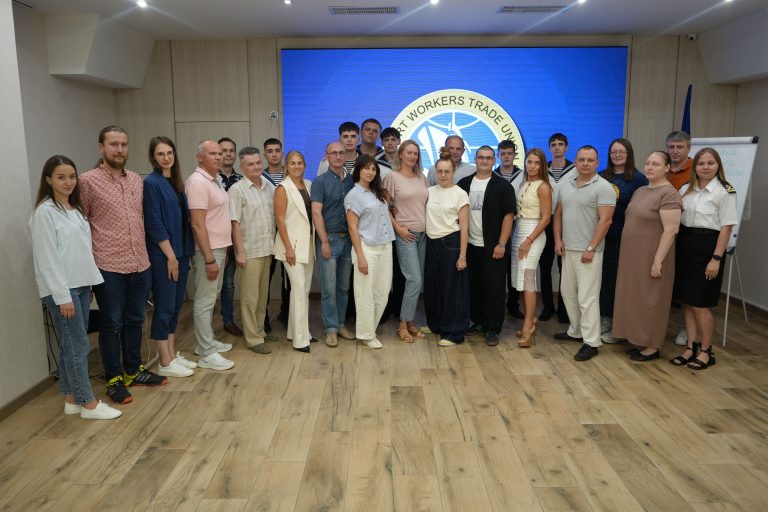
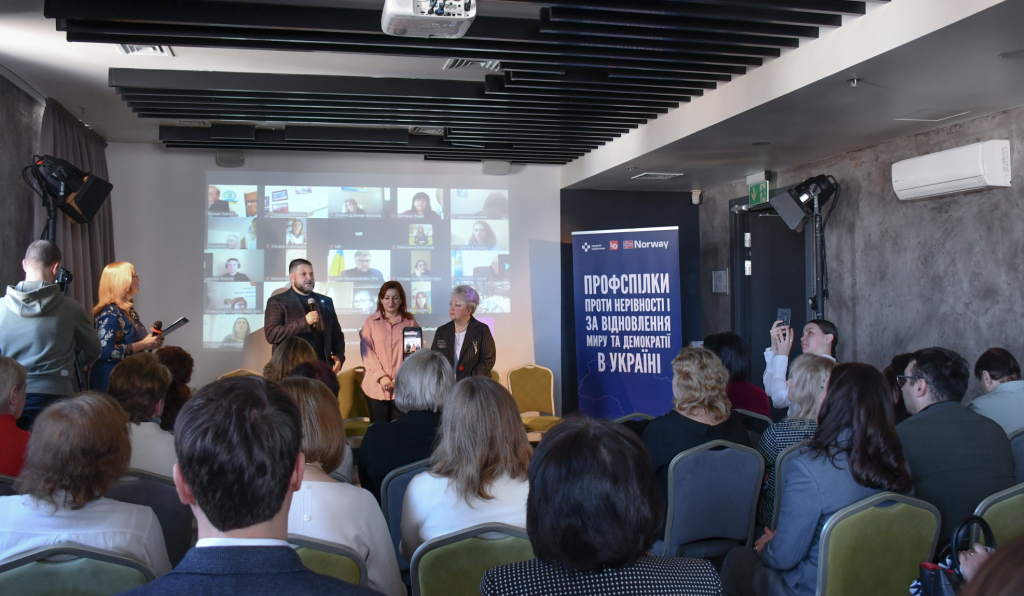
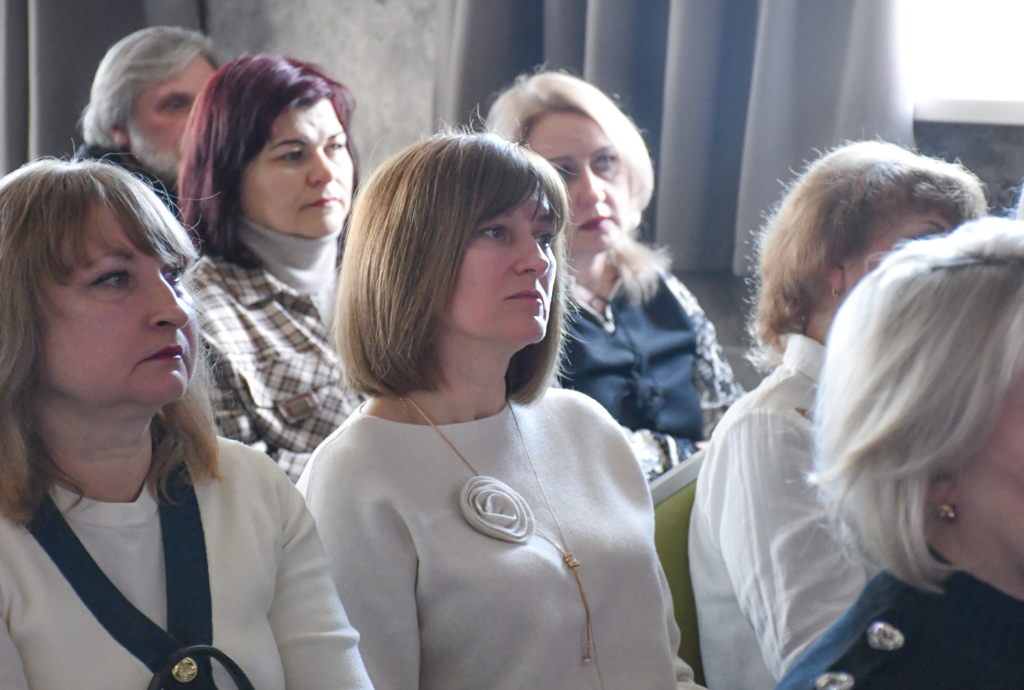
On March 5 in Kyiv, just before International Women’s Day, the Federation of Trade Unions of Ukraine hosted a roundtable called “Women’s Leadership and Resilience: Challenges of Wartime.” About 40 participants attended, including FPU leaders, sectoral union representatives, ILO officials in Ukraine, and representatives from the Ministry of Social Policy and the Ministry of Economy.
While the state guarantees equal rights to work and pay for all workers, regardless of gender, in practice, women in Ukraine encounter increased workloads, discrimination, and a gender pay gap.
The women in Ukraine took on the responsibility for their families, becoming “heads of households” due to the mobilization of men, while continuing to work in essential sectors. They show exceptional courage, balancing the protection of the state with saving lives at home, transforming the role of women in society. For example, according to the speakers, 600,000 women are now working in the mining sector, and 70% of education sector workers are female.
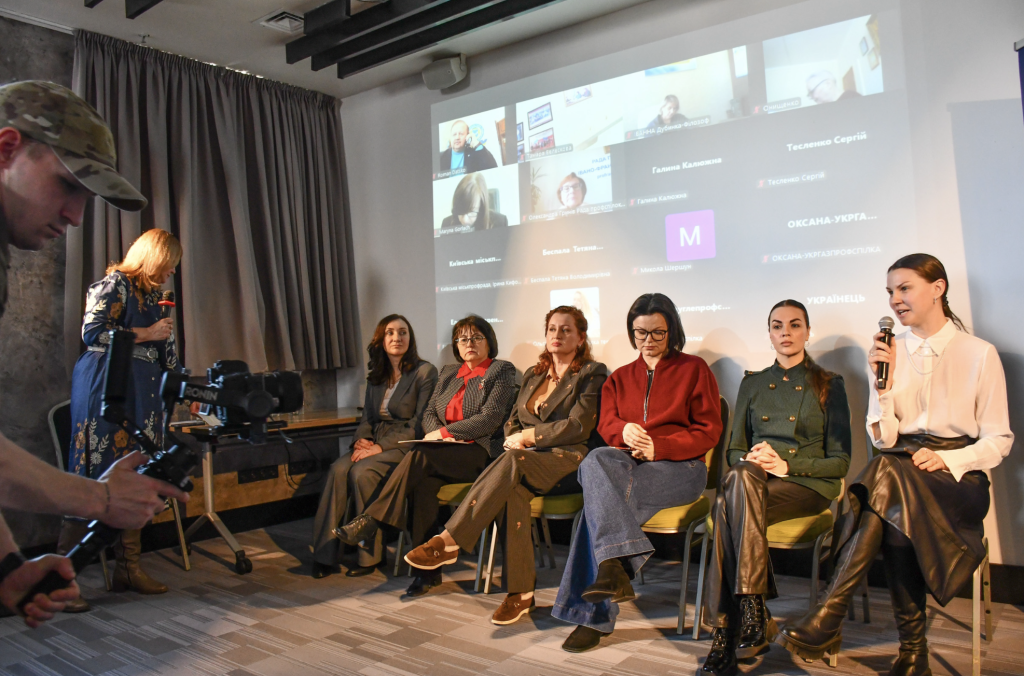
During the panel sessions, speakers discussed a range of important issues such as women`s challenges as war refugees abroad and internally displaced persons in Ukraine, reskilling women, and their engagement in male-dominated professions. For example, 78% of internally displaced women successfully find employment in their new communities, typically in trade, education, medicine, and manufacturing. The government incentivizes employers by offering compensation for employing displaced workers through employment centers.
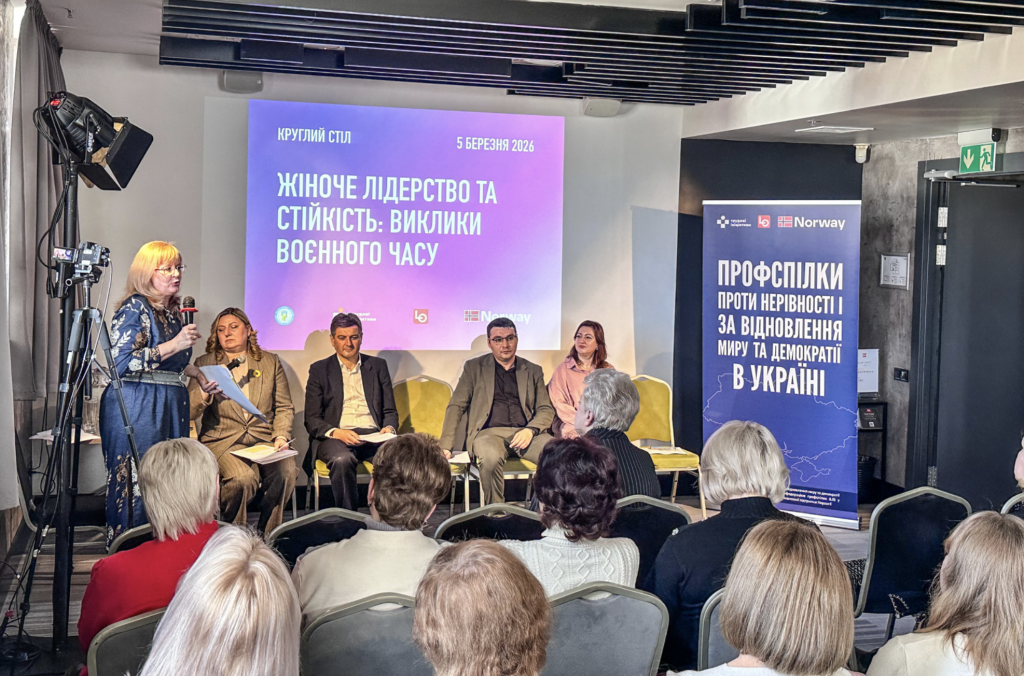
The second panel discussion primarily focused on the draft Labor Code. Participants discussed how EU gender equality standards align with Ukraine’s current legal and cultural protections. Although the state promises equal pay, women still face difficulties, including higher workloads and an ongoing gender pay gap.
The roundtable concluded with a comprehensive roadmap for unions and the government. Among them:
- Legislative Protection: Ensuring that labor reforms do not narrow existing social guarantees for women while moving toward EU standards.
- Education: Expanding the use of state training vouchers and international reskilling projects for displaced women.
- Veteran Support: Prioritizing the socialization and rehabilitation of female veterans.
- Work-Life Balance: Developing gender-sensitive workplaces through collective bargaining and social dialogue.
- Ratification of International Standards: Urging the government to ratify ILO Convention 190 (Violence and Harassment) and Convention 171 (Night Work).